
Key takeaways
- Chloride content and plate wall temperature together decide the plate grade. The same water can suit 316 at 25 °C and need a higher grade at 75 °C.
- Stainless steel 316 is the general-purpose choice. 304 is for clean, low-chloride water.
- Sea water, brackish water and chloride brines take titanium Gr. 1 plates, always.
- The gasket sets the temperature limit of a gasketed unit: NBR for oils, EPDM for hot water and steam, FKM for acids and hot oils.
- A water analysis sent with the enquiry lets the right grade be chosen the first time.
Why does material selection matter in a plate heat exchanger?
The right plate and gasket materials give a plate heat exchanger a long, leak-free service life. The wrong ones can fail early, however well the unit is sized.
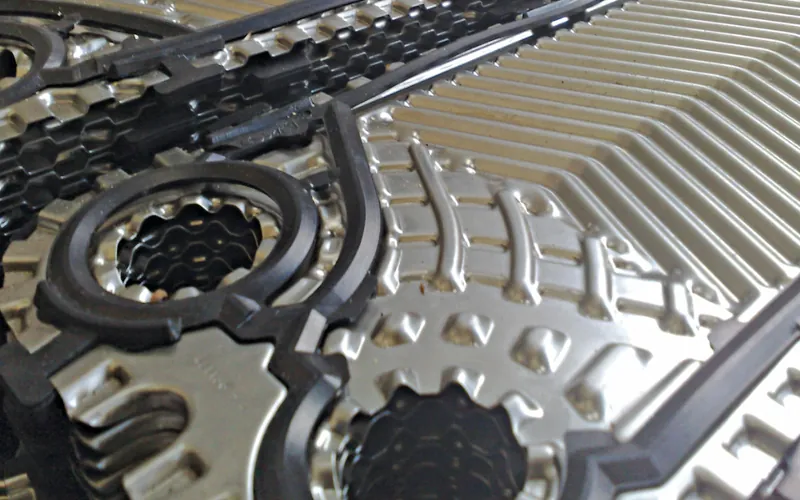
Plates are thin, which is what makes them efficient and keeps titanium and higher alloys affordable. It also means there is no metal to spare: the material must resist the fluid completely. Chlorides are the usual risk for stainless steel, and they become more aggressive as the plate gets hotter.
This guide gives the working limits ARES PHE engineering uses as a starting point. For the full selection sequence, see how to choose a plate heat exchanger.
Plates that last
A grade matched to the chloride content and temperature resists pitting for the long term.
Fewer unplanned stops
Gaskets matched to the fluid keep their seal between planned service intervals.
Alloy only where needed
Titanium and 6Mo are specified where the water demands them, and 316 everywhere else.
Chloride limits by plate material and temperature
Find your chloride content, then read across to the hottest temperature the plate wall will see. If the figure in the table is lower than your chloride content, move down to the next material.
| Plate material | 25 °C77 °F | 50 °C122 °F | 75 °C167 °F | 100 °C212 °F |
|---|---|---|---|---|
| Stainless steel 304 | 100 | 75 | 40 | below 20 |
| Stainless steel 316 | 400 | 180 | 120 | 50 |
| 904L | 1,000 | 500 | 250 | 130 |
| 6Mo | 5,000 | 1,800 | 750 | 400 |
| Titanium Gr. 1 | Sea water, brackish water and chloride brines. Sea water up to about 100 °C. | |||
An example. Cooling water with 150 ppm chloride suits 316 plates when the plate wall stays near 25 °C, because the guideline is 400 ppm. If the same water meets a plate wall at 75 °C, the 316 guideline falls to 120 ppm, so the selection moves to 904L or 6Mo.
These figures are guidance, not guarantees. They apply to flowing water at about pH 7. Other conditions, and every final selection, are confirmed by ARES PHE engineering from the fluid data.
- Sea water and brackish water: titanium Gr. 1, never 6Mo or stainless steel
- Calcium or sodium chloride brines: titanium Gr. 1
- Fluorides attack titanium, so report them in the analysis
- Ammonia: 316L plates and no copper anywhere, so no copper-brazed units
- Sulphuric and hydrochloric acids: nickel alloy C-276, on engineering review
- 904L and other special alloys: on request, after engineering review
Which materials suit which duty?
These are the duties buyers ask about most, with the usual starting selection for each.
Closed loops and district heating
Treated water in a closed circuit is low in chlorides. Stainless steel 316 plates with EPDM gaskets are the usual selection, as in the gasketed ARES PHE A-Series and AP-Series.
Cooling-tower water
Tower water is open to the air, and evaporation concentrates the chlorides it carries. Stainless steel 316 often fits, but the analysis has to be checked against the plate wall temperature in the chloride table above.
Sea-water cooling
Central coolers on ships and in coastal plants run sea water on one side. Titanium Gr. 1 plates are used, always, with EPDM gaskets on the water side and NBR where the other side is oil.
Geothermal water and chloride brines
Geothermal brine and calcium or sodium chloride brines are far beyond the stainless grades. Titanium Gr. 1 plates are the selection. If fluorides are present, tell us, because fluorides attack titanium.
Oil cooling
Lube oil, hydraulic oil and fuel coolers use stainless steel plates with NBR gaskets. Where the oil runs hotter than NBR allows, FKM or a welded design takes over.
Acids and aggressive chemicals
Sulphuric and hydrochloric acid duties call for nickel alloy C-276 plates and FKM gaskets, or a design with no gasket in the process stream, such as the ARES PHE AFW fully welded series. These duties always go through engineering review.
Have a water analysis?Send it with your temperatures and ARES PHE engineering will confirm the plate and gasket materials.
Contact our engineersWhat are the temperature limits of plate heat exchanger gaskets?
The gasket sets the practical temperature limit of a gasketed unit and has to be compatible with both fluids. ARES PHE supplies three compounds as standard.
| Gasket | Typical fluids | Maximum | Minimum |
|---|---|---|---|
| NBR | Water, oils and fuels | 145 °C293 °F | -20 °C-4 °F |
| EPDM | Hot water, steam, glycols and cleaning chemicals. Not for oils. | 150 °C302 °F | -35 °C-31 °F |
| FKM | Acids, hot oils and aggressive chemicals | 180 °C356 °F | -5 °C23 °F |
Other compounds are available on request, including HNBR for hot oils, a high-temperature EPDM for steam up to 175 °C (347 °F) and an FKM grade for steam up to 200 °C (392 °F). Limits depend on the compound and the fluid, so treat them as guidance.
Where the fluid or the temperature is beyond any gasket, the answer is a welded design: ASW semi-welded, AFW fully welded, AWB welded block or ASP shell and plate.
What to send for a material selection
With these details, the plate and gasket materials can be confirmed together with the thermal selection.
- Both fluids, with concentrations
- Chloride content in ppm
- pH of the water
- Highest temperature on each side
- Solids or fibres in the fluid
- Fluorides, if any are present
- Cleaning chemicals used on site
- Any material your specification requires
Why ARES PHE
ARES PHE presses its own plates in Adana, Türkiye, with a pressing capacity of up to 20,000 tons. Stainless steel 304, 316 and titanium Gr. 1 are standard plate materials, with 6Mo and nickel alloy C-276 available as options, so the material follows the duty instead of the stock list.
NBR, EPDM and FKM gaskets are standard, with further compounds on request. On the A-Series, gaskets clip on without glue, which keeps a later gasket change quick.
ARES PHE engineers check every selection against your fluid data before an offer is made. The product range runs from gasketed units to fully welded designs, so the recommendation is not limited to one type of exchanger.
Frequently asked questions
What chloride level can stainless steel 316 plates handle?
As a guideline for flowing water at about pH 7, 316 plates handle around 400 ppm chloride at a plate wall temperature of 25 °C. The limit falls to about 180 ppm at 50 °C, 120 ppm at 75 °C and 50 ppm at 100 °C. Final selection is confirmed by ARES PHE engineering.
Can stainless steel or 6Mo plates be used with sea water?
No. Sea water and brackish water take titanium Gr. 1 plates, always. 6Mo extends the chloride range for process waters, but it is not a sea-water material. Titanium is used with sea water up to about 100 °C.
Why does temperature change the plate material?
Chloride attack on stainless steel speeds up as the plate gets hotter, so the tolerable chloride content drops. Water that suits 304 at 25 °C, up to about 100 ppm, needs to stay below about 20 ppm at 100 °C. The plate wall temperature is the figure that counts.
Which gasket should I choose for hot water, and which for oil?
EPDM is the usual choice for hot water, steam, glycols and cleaning chemicals, but it is not suitable for oils. NBR is the usual choice for water, oils and fuels. FKM covers acids, hot oils and aggressive chemicals. Limits depend on the compound and the fluid.
What if my fluid or temperature is beyond gasket limits?
Then a design without gaskets in contact with the fluid is used. Semi-welded units keep the aggressive fluid in a welded channel. Fully welded, welded block and shell and plate designs remove process-side gaskets altogether. ARES PHE engineering confirms the design limits for each case.