
Textile
Textile dyeing, finishing, and processing use enormous amounts of hot water and steam, and the energy economics of textile manufacturing are dominated by how efficiently that heat is generated, used, and recovered. Plate heat exchangers handle heat recovery from effluent streams, dye bath temperature control, boiler feed water pre-heat, and the recurring thermal duties throughout textile mills.
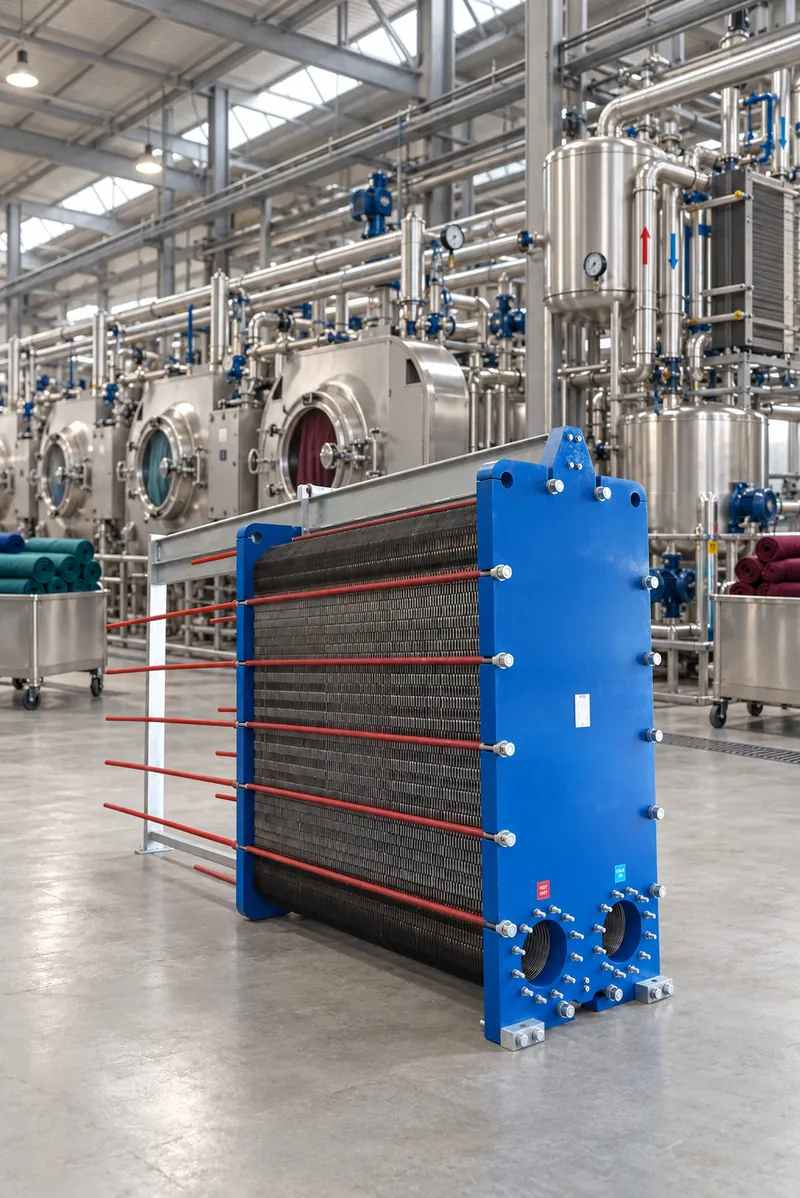
Engineered for Heat Recovery and Process Cooling
Textile mills run on hot water, dyeing baths at 60-130°C, washing and finishing operations, steam boilers feeding the process lines. The economics of energy use dominate operating cost, and plate heat exchangers are the primary tool for recovering heat from hot effluent streams to pre-heat fresh process water.
Free-flow plate geometry (AWG) handles textile effluent loaded with fibre, dye particles, and oil residues. Standard A-Series handles utility duties. Effluent-side material selection accounts for the chemistry of dye bath wastes and finishing chemistries.
Where PHEs Work in Textile Mills
From the dye house effluent stream to the boiler feed water pre-heater, plate heat exchangers handle the heat-transfer duties that drive textile mill energy economics.
Effluent Heat Recovery, The Energy Lever
Textile dyeing and finishing discharge enormous volumes of hot effluent, typically at 60-90°C, that historically went straight to drain, taking the energy with it. Modern textile mills recover this heat through a plate heat exchanger to pre-heat fresh process water, capturing 60-70% of the otherwise-lost thermal energy.
The PHE must handle effluent with elevated suspended solids, fibre content, and dye/finish chemistry. AWG free-flow plates with 5.5+ mm channel gaps prevent fibre blockage; AISI 316L plates resist the dye-bath chemistries. Heat recovery payback periods are typically under 18 months in active dye houses.
Dye Bath Temperature Control
Dye baths are heated to specific temperatures for each dye class and fibre type, reactive dyes at 60°C, acid dyes at 90°C, polyester dyes at 130°C under pressure. PHEs handle the heating and cooling of dye bath circulating streams.
Plates and gaskets selected for the dye chemistry; FKM for the more aggressive dye baths.
Boiler Feed Water Pre-Heat
Steam boilers in textile mills run continuously. Recovering heat from auxiliary streams (effluent, condensate, blowdown) to pre-heat boiler feed water dramatically improves boiler efficiency.
Standard A-Series handles the duty; verified thermal performance ensures the heat-balance calculation matches reality.
Hot Water Generation
Continuous textile washing, scouring, and finishing operations require large volumes of hot water at 60-80°C. PHE-based hot water generators handle the duty instantaneously, reducing the legionella risk of stored hot water systems.
Standard A-Series handles the duty.
Condensate Recovery
Steam condensate from textile process operations carries useful thermal energy. PHEs handle the condensate cooling step before return to the boiler condensate tank.
Compact A-Series fits utility room layouts.
Cooling Tower Side Utilities
Textile mill chilled water and cooling water utilities, for chiller plants, compressor cooling, and finished product chilling, all use PHEs at the closed/open cooling water interface.
Standard A-Series and AP-Series cover the duty range.
Caustic & Bleach Heating
Mercerisation (caustic soda), bleaching (hydrogen peroxide), and scouring chemistries need temperature control. PHEs handle the heating and cooling of these chemistry-side streams.
Nickel alloy plates for high-concentration caustic; FKM gaskets for bleach chemistry.
Why PHEs Are Standard in Textile Manufacturing
Heat Recovery
60-70% energy recovery from effluent streams with sub-18 month payback
Free-Flow Geometry
AWG plates handle fibre-laden effluent and dye-bath particulates
Compact Retrofit
Fits existing utility rooms without major plant modifications
Effluent Resistant
316L and higher alloys handle dye-bath and finishing chemistries
Energy Reduction
Mill energy cost reductions of 20-30% achievable through heat recovery
Recommended Products for Textile
A-Series (Gasketed)
BFW pre-heat, hot water, condensate, utilities
AWG Free Flow
Effluent heat recovery, fibre-laden streams
AP-Series (Performance)
Tight-ΔT duties, chiller-side cooling
Case Studies
Real projects, real results. See how ARES PHE plate heat exchangers perform in Textile installations worldwide.
Textile Case Study
Project overview, engineering approach, and measured results from a real installation.
Read Case Study →Engineer Your Textile Mill PHE With Us
Heat recovery is the single biggest energy efficiency lever in textile manufacturing. Our application engineers help you identify the highest-value heat recovery opportunities and specify the right PHE for each duty.