
Oil & Gas
From upstream wellhead production through midstream gas processing to downstream refining, plate heat exchangers move heat across every stage of the oil and gas value chain. Crude oil dehydration, amine sweetening, gas dehydration, sour water cooling, lean/rich exchange: PHEs handle these duties at the pressures, temperatures, and chemistry the oil and gas industry demands.
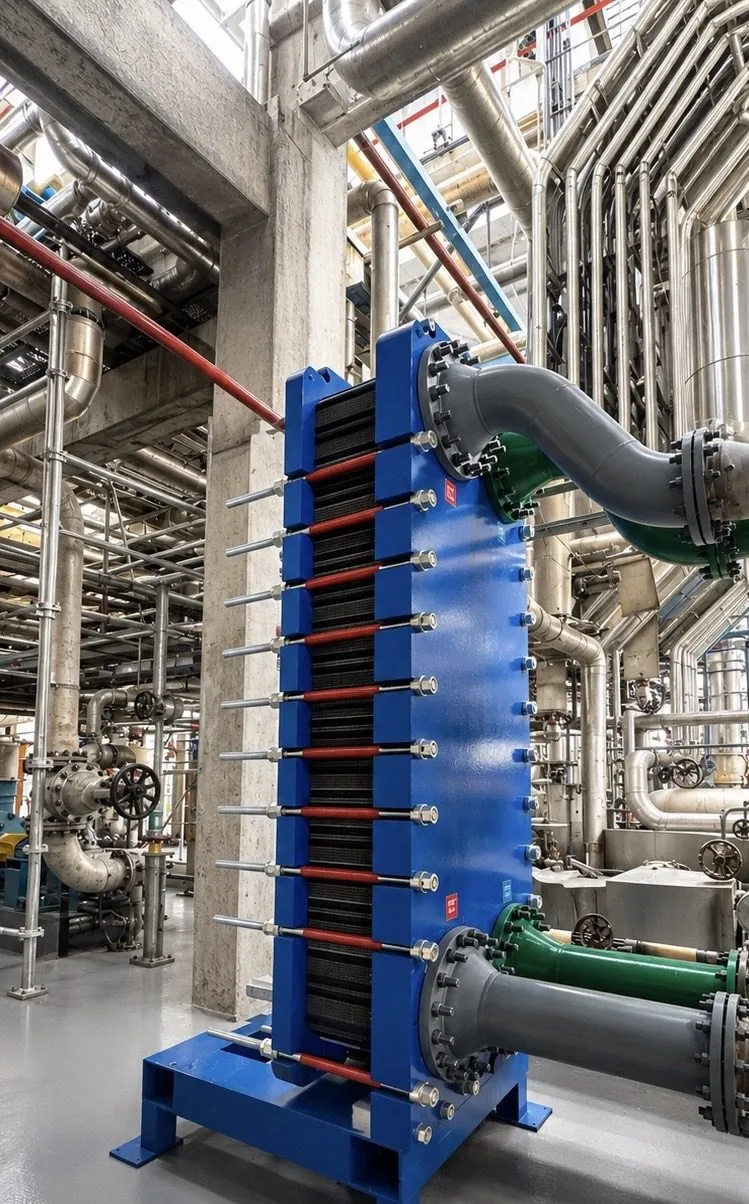
Engineered for API-662 Duties and Sour Service
ARES PHE supplies oil and gas plate heat exchangers compliant with API Standard 662 (the oil and gas industry's plate-and-frame heat exchanger code), NACE MR0175 / ISO 15156 for sour service, and code-stamped to PED Module H, ASME Section VIII Division 1, and AD 2000 Merkblatt. Our welded plate technology (AFW) and shell-and-plate construction (ASP) handle the most aggressive crude, sour gas, and acid-condensate duties.
ATEX-compliant frame components for Zone 1 and Zone 2 areas, hydrogen-service materials, and class society approvals (e.g., Lloyd’s Register, BV, ABS, RINA) for offshore platforms, all available from our standard supply.
Where PHEs Work in Oil & Gas
From the wellhead to the refinery, PHEs handle heat-transfer duties across every operational stage in upstream, midstream, and downstream operations.
Crude Oil Dehydration & Desalter Heat Recovery
Upstream crude oil leaves the wellhead with water and dissolved salts. The desalter removes them, but the process requires the crude to be heated to 110–140°C. ARES PHE supplies the crude/water and crude/crude heat exchangers that recover heat from the hot desalted crude to pre-heat incoming wet crude, a major energy-efficiency play across every upstream and downstream facility.
Crude/crude exchange is high-fouling duty, the crude carries waxes, asphaltenes, and dissolved solids that foul conventional plates rapidly. AWG free-flow geometry resists fouling for far longer service intervals than shell-and-tube alternatives.
Amine Sweetening (Lean / Rich Exchange)
Gas sweetening units (MDEA, MEA, DEA) require lean/rich amine heat exchange to recover heat from regenerated lean amine before it returns to the absorber. The exchange is a primary energy-efficiency lever, every degree of recovery reduces reboiler steam demand.
Amine service requires careful material selection (304L or 316L plates) and amine-compatible gaskets (EPDM or FEPM, depending on amine type).
Sour Water Cooling
Sour water from crude distillation, hydrotreating, and stripping operations contains H₂S and ammonia. Cooling the sour water before storage or stripping requires materials compliant with NACE MR0175 / ISO 15156, the industry standard for sulphide stress cracking (SSC) resistance.
AFW fully welded units eliminate gasket exposure to sour service.
Glycol Dehydration
Natural gas dehydration using triethylene glycol (TEG) requires lean/rich glycol heat exchange to recover regeneration energy. The duty is moderate, but the rich glycol carries some absorbed hydrocarbons.
Heat integration across the gas-dehydration train improves overall plant thermal efficiency.
Closed Cooling Water Systems
Refinery and gas plant utility cooling water systems use plate heat exchangers throughout, between closed treated cooling water and open cooling-tower water, between process units and central cooling, and as backup for shell-and-tube reboilers.
Standard A-Series and AP-Series Performance units handle the bulk of the duty; AFW where the process side cannot tolerate gaskets.
Lube & Seal Oil Cooling
Reciprocating compressors, turbines, and pumps used throughout oil and gas operations all require lube oil and seal oil cooling. Pressure ratings up to 30 bar on the oil side; NBR or HNBR gaskets per specification.
Compact A-Series footprint suits skid-mounted compressor packages.
Wellhead & Process Cooling
Upstream wellhead operations and downstream process units use PHEs for inter-stage cooling, sample cooling, vent gas cooling, and emergency dump cooling. ATEX certification of frame components is required where hydrocarbon vapours may be present.
Class society approval is required for offshore platform installations.
Why PHEs Are Standard in Oil & Gas
API-662 Compliant
The oil and gas plate-and-frame heat exchanger industry code
NACE Materials
Sour service materials compliant with MR0175 / ISO 15156
ATEX Frames
Zone 1 and Zone 2 frame components for hydrocarbon environments
FAT Witnessed
Factory acceptance testing arranged on request, class society witnessing available
Code Stamped
PED Module H, ASME Section VIII Division 1, AD 2000
Recommended Products for Oil & Gas
A-Series (Gasketed)
Closed cooling water, lube oil, glycol dehydration
AP-Series (Performance)
High-efficiency duties where compact size is critical
AFW Full Welded
Sour water, amine, sour gas, no gasket exposure
AWG Free Flow
Crude/crude exchange, dehydration, fouling duties
Case Studies
Real projects, real results. See how ARES PHE plate heat exchangers perform in Oil & Gas installations worldwide.
Oil & Gas Case Study
Project overview, engineering approach, and measured results from a real installation.
Read Case Study →Specify Your Oil & Gas PHE With Our Application Engineers
Oil and gas duties demand API-662 compliance, sour-service materials, ATEX-zoned frame components, and full code documentation. Our engineering team supports your specification from FEED through commissioning.