
Marine Applications
From a container ship crossing the Pacific to a cruise liner carrying 5,000 passengers, a single vessel can have dozens of plate heat exchangers working simultaneously, cooling engines, heating fuel, generating freshwater, and conditioning air for everyone on board. They are as essential to a ship’s operation as the engines themselves.
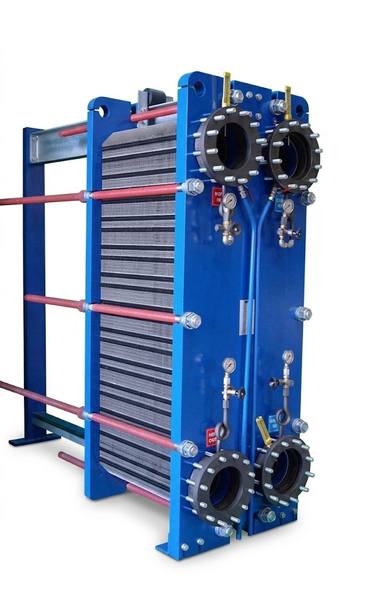
Compact, Corrosion-Resistant, Built for Life at Sea
On a ship, every square metre of space matters, and so does every kilogram. Traditional shell-and-tube heat exchangers are bulky, heavy, and take up engine room space that could be better used.
ARES PHE marine plate heat exchangers deliver the same cooling and heating capacity in a fraction of the size and weight, with titanium plates that resist seawater corrosion.
From engine rooms to FPSO topsides, proven in hundreds of vessels worldwide.
Where PHEs Work on Board
Central Cooling System, The Heart of Every Engine Room
Most modern vessels operate a two-loop central cooling system: a low-temperature freshwater loop and a high-temperature freshwater loop, both rejecting heat to seawater through central coolers. The PHE sits at this critical junction, transferring heat from clean freshwater circuits to the seawater side.
By keeping seawater isolated in the central cooler only, you protect every other piece of equipment from corrosion. The engine, the generator, the compressors. They all see clean, treated freshwater. Only the PHE’s plates touch seawater, and those plates are made of titanium, which offers outstanding resistance to seawater corrosion.
Main Engine Jacket Water
The main engine is the biggest heat generator on board. Cylinders, pistons, exhaust valves, and cylinder liners all need continuous cooling. Overheating leads to deformation, seizure, and catastrophic failure.
The low hold-up volume of a PHE means fast response times. When engine load changes during manoeuvring, speed changes, or port entry, the cooling system reacts almost instantly.
Lubricating Oil Cooling
Engine lube oil must be maintained within a tight temperature window. Too hot and it breaks down. Too cold and it’s too thick to circulate. PHEs are the standard for main engines, auxiliaries, gearboxes, and generators.
Lube oil coolers are among the most frequently serviced PHEs on board. The ability to open, inspect, and re-gasket at sea, without specialist tools, is a major operational advantage.
Heavy Fuel Oil Heating
HFO is thick, viscous, and often contaminated. Before injection into the engine, it must be heated to reduce viscosity so it flows through filters, separators, and injectors. PHEs pre-heat HFO using steam or waste heat recovery.
When fuel quality is poor, as it often is in practice, the ability to open the PHE and clean both sides of every plate is invaluable.
Auxiliary Engine & Generator Cooling
Beyond the main engine, vessels carry multiple auxiliary engines and generators powering navigation, cargo handling, and hotel systems. Each generates heat that must be managed: jacket water, lube oil, and charge air cooling.
PHEs’ small footprint is particularly valuable where auxiliary equipment is squeezed into whatever space remains after the main engine installation.
Freshwater Generation
Desalination systems on board use waste heat from the engine cooling system to evaporate seawater and produce freshwater for drinking, boiler feed, and technical use. PHEs serve as condensers and preheaters in these systems.
Hydraulic Oil Cooling
Hydraulic systems operate deck cranes, cargo hatches, winches, steering gear, and stabiliser fins. These generate significant heat under load. PHEs provide efficient cooling in a compact package, important on deck and in machinery spaces where equipment is tightly packed.
Compressor Cooling
Ships use compressed air for engine starting, pneumatic controls, cargo handling, and deck equipment. PHEs serve as aftercoolers and intercoolers in compressed air systems, maintaining air quality and compressor efficiency.
HVAC for Crew & Passengers
Cruise ships, ferries, and naval vessels require air conditioning and heating for crew quarters, passenger areas, and bridge spaces. PHEs separate the vessel’s central chilled/heated water from zone distribution loops, providing comfort control throughout the ship.
Why PHEs Are the Marine Industry Standard
80% Smaller
More cargo capacity, better fuel economy, easier installation
Titanium for Seawater
Highly resistant to seawater corrosion up to 120°C, compatible with chlorination
Anti-Fouling
High turbulence resists biological fouling, sediment, and scale build-up
At-Sea Service
Open, inspect, re-gasket by your own crew, no specialist tools needed
Class Approved
Certified by internationally recognised classification societies (e.g., BV, ABS, RINA)
Recommended Products for Marine
A-Series (Gasketed)
Central coolers, lube oil, jacket water
ABR (Brazed)
Compact units for auxiliary systems
AFW (Full Welded)
Gasket-free for critical offshore duties
The Bottom Line: A modern vessel is a floating power plant, hotel, and logistics centre rolled into one, and plate heat exchangers are the silent workhorses keeping every system on board within its operating limits. From the main engine to the passenger cabins, from the fuel tanks to the freshwater taps, PHEs deliver reliable, efficient, compact heat transfer in one of the most demanding operating environments: the open sea.
Case Studies
Real projects, real results. See how ARES PHE plate heat exchangers perform in Marine installations worldwide.
Marine Case Study
Project overview, engineering approach, and measured results from a real installation.
Read Case Study →Built for Life at Sea
Contact our marine engineering team to specify plate heat exchangers for your vessel or offshore platform.